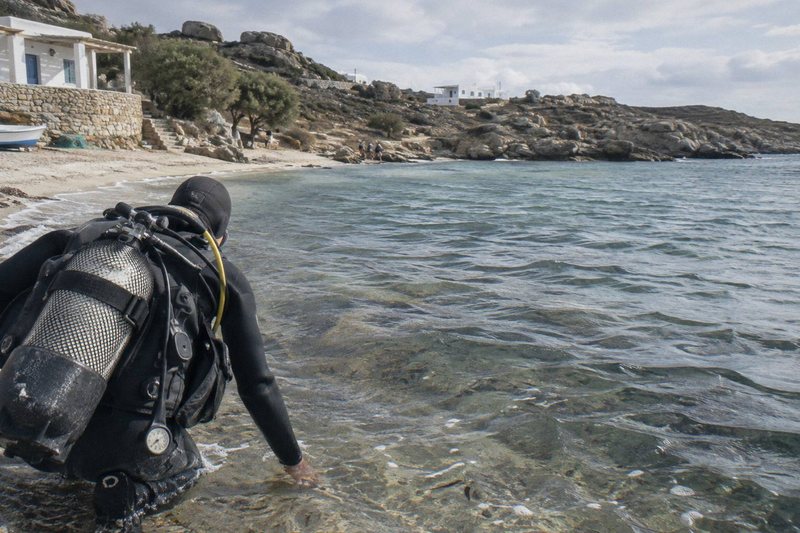
How Long Should You Wait To Fly After Scuba Diving?
DAN's preflight surface intervals explained for Mykonos divers: 12 hours after a single no-decompression dive, 18 hours after multiple dives or days, and which trips here count as one dive.
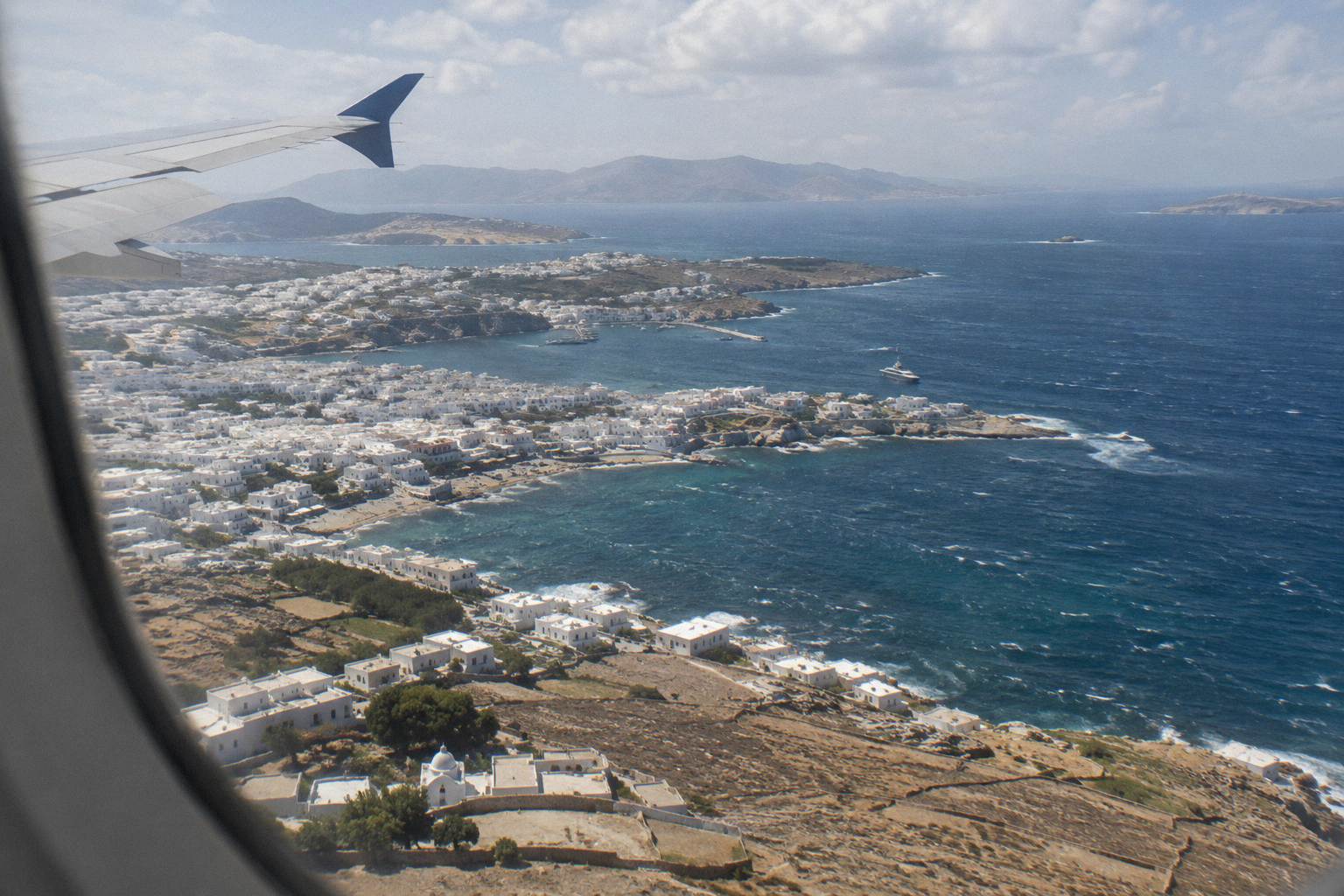
DAN, the Divers Alert Network, recommends a minimum preflight surface interval of 12 hours after a single no-decompression dive. After multiple dives in one day, or diving on consecutive days, the figure rises to 18 hours. Those two numbers are the whole answer for almost every recreational diver on Mykonos, and the trips covered by Mykonos Scuba Diving are all short shore dives that fit neatly into one of those two cases. The rest of the question is bookkeeping: which trip counts as one dive, which might count as more, and what happens after a snorkel rather than a dive.
DAN, the Divers Alert Network, recommends a minimum preflight surface interval of 12 hours after a single no-decompression dive, and 18 hours after multiple dives per day or multiple days of diving. After dives that require decompression stops, DAN says little evidence exists and an interval substantially longer than 18 hours appears prudent. These are the agency's own published figures rather than advice for any individual traveller.
The guidance comes from DAN's flying after diving resource, which is the reference most dive professionals point to when a customer asks about a flight home. The reason for the wait is well understood: diving loads the body with dissolved nitrogen, and the reduced cabin pressure in an aircraft accelerates the formation of bubbles in a way that sea-level surface time does not. The interval gives the excess gas time to leave before the body goes back up to altitude.
Two practical notes about how the numbers work. First, they are minimums for no-decompression recreational diving, which is the only kind of diving sold here. Second, they stack with the day's plan rather than the trip's start time: the clock begins when the diver surfaces from the last dive, not when the minibus left the hotel. A diver who surfaces in the early afternoon has a very different evening from one who surfaces at dusk, even though both made the same single dive.
The table below restates the three DAN lines so they are easy to check against a departure day.
| Diving Done | DAN Minimum Preflight Interval |
|---|---|
| One single no-decompression dive | 12 hours from surfacing |
| Multiple dives in one day, or multiple days of diving | 18 hours from the last surfacing |
| Dives requiring decompression stops | Little evidence exists; substantially longer than 18 hours appears prudent |
What does any of this mean for the trips listed here? The short version is that nothing on this island's dive menu pushes a healthy recreational diver beyond the 18-hour line, because no trip involves decompression stops and no single trip stacks dive upon dive across days. The one open question is the middle row: a traveller who books more than one trip, or dives on two consecutive days, moves from the 12-hour case to the 18-hour case even if every individual trip was a single dive.
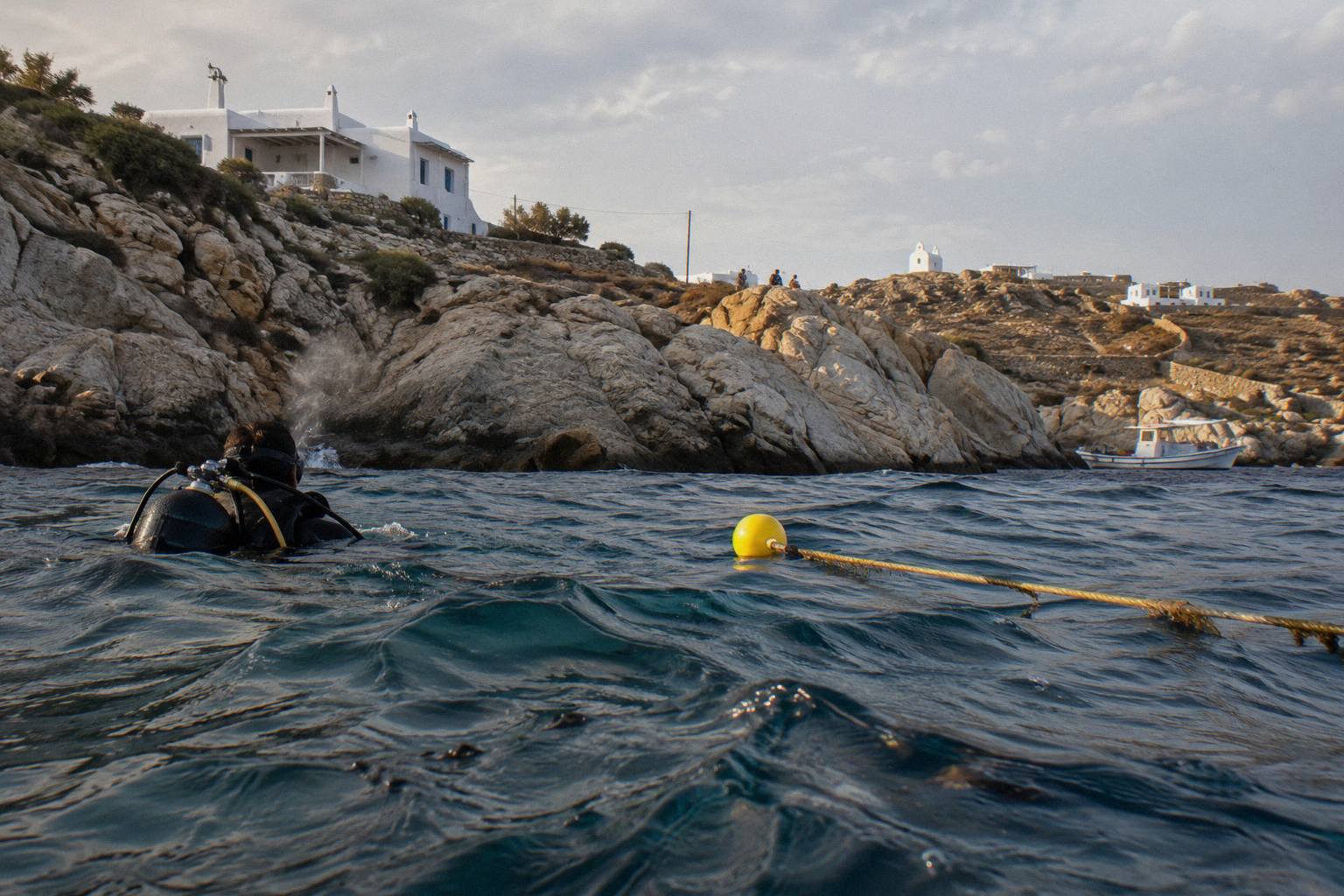
The three dive products below are the ones a first-time or certified diver will compare, and each carries a different dive count, which is the detail that decides which DAN line applies. Reading the count before booking is easier than rearranging a flight afterwards.
Does One Try Dive Trigger The 12-Hour Line?
The First-Timer Try Dive at Lia reef involves exactly one open-water dive of 40 to 45 minutes, so on its own it sits under DAN's 12-hour line for a single no-decompression dive; the Discover Scuba Diving Adventure at Paradise Beach gives no dive count, so ask the operator how many water sessions it runs before applying either figure. The two trips answer the question differently.
The GoDive product, sold under the name "Try a DIVE", is a mini course of about 1 hour 30 minutes covering diving theory, equipment knowledge and some exercises, followed by one open-water dive of 40 to 45 minutes on the Lia reef. It is a shore dive from Lia Beach in the south-east of the island, run by GoDive Mykonos Diving Center, a PADI Dive Resort. It is rated 4.9 from 234 reviews and priced from €160 per person, minimum age 10, with hotel and port pickup available at a surcharge. Free cancellation applies up to 24 hours before the start, and a weather condition applies.
Because the entry gives exactly one dive, the arithmetic is clean: surface from that single dive, and DAN's 12-hour minimum preflight interval is the relevant line. A traveller who wants the mechanics of the day laid out before committing can read what a try dive on Mykonos actually involves, and anyone weighing this trip against the Paradise Beach alternative can look at the Try a DIVE at Lia reef tour page or check availability for a chosen date.
The Paradise Beach comparison is less tidy. The Beginner Dive on Paradise House Reef, sold as a PADI Discover Scuba Diving experience, lasts 2 hours 30 minutes and is described by the centre as "not a certification course", but the number of open-water dives within that window is not given, so the way to settle the flight question is to ask the operator before booking. The centre says its beach-entry dive follows Paradise House Reef towards the pier for about an hour, and its locations are chosen daily by weather and diver experience. Either way the trip stays within the 18-hour line, since nothing approaches decompression diving.
One thing worth separating from the timing question: a try dive is an introduction, never a certification. A recognition card or a try-dive record is not a diving licence and does not unlock any certified-diver trip. Anyone still deciding between the two entry routes can read whether you can dive without a certification before booking either one.
For travellers whose departure day is fixed and whose heart is set on one clean, single-dive answer, the Lia reef try dive is the simplest case on the island: one dive, one clock, DAN's 12-hour line.
Where Does The Certified Diver Trip Sit?
The Certified Divers, One Tank, 3 Hours trip uses a single tank and counts as one dive, so on its own it falls under DAN's 12-hour line for a single no-decompression dive; adding a second dive the same day, or diving again the next day, moves the traveller to the 18-hour line. It requires an existing certification card, minimum age 10, from €148 per person.
This trip is run by the dive centre at Paradise Beach, about 10 minutes from Mykonos Town, and it is rated 4.9 from 76 reviews. All necessary equipment is included and food and drinks are not. All sales are final, with a weather-cancellation condition. The certification level required, the depth, the site and the craft are questions for the operator; the trip is a guided dive for qualified divers who hold a card, full stop.
Its relevance to the flight question is the tank count. One tank means one dive in almost every reading, which places a single booking on DAN's 12-hour line. The complication arrives with repetition: DAN's 18-hour line covers "multiple dives per day or multiple days of diving", and a certified diver on a week-long island stay is exactly the person likely to book two or three of these trips. Two consecutive days of one-tank diving means the 18-hour interval, counted from the last surfacing, applies before the flight home.
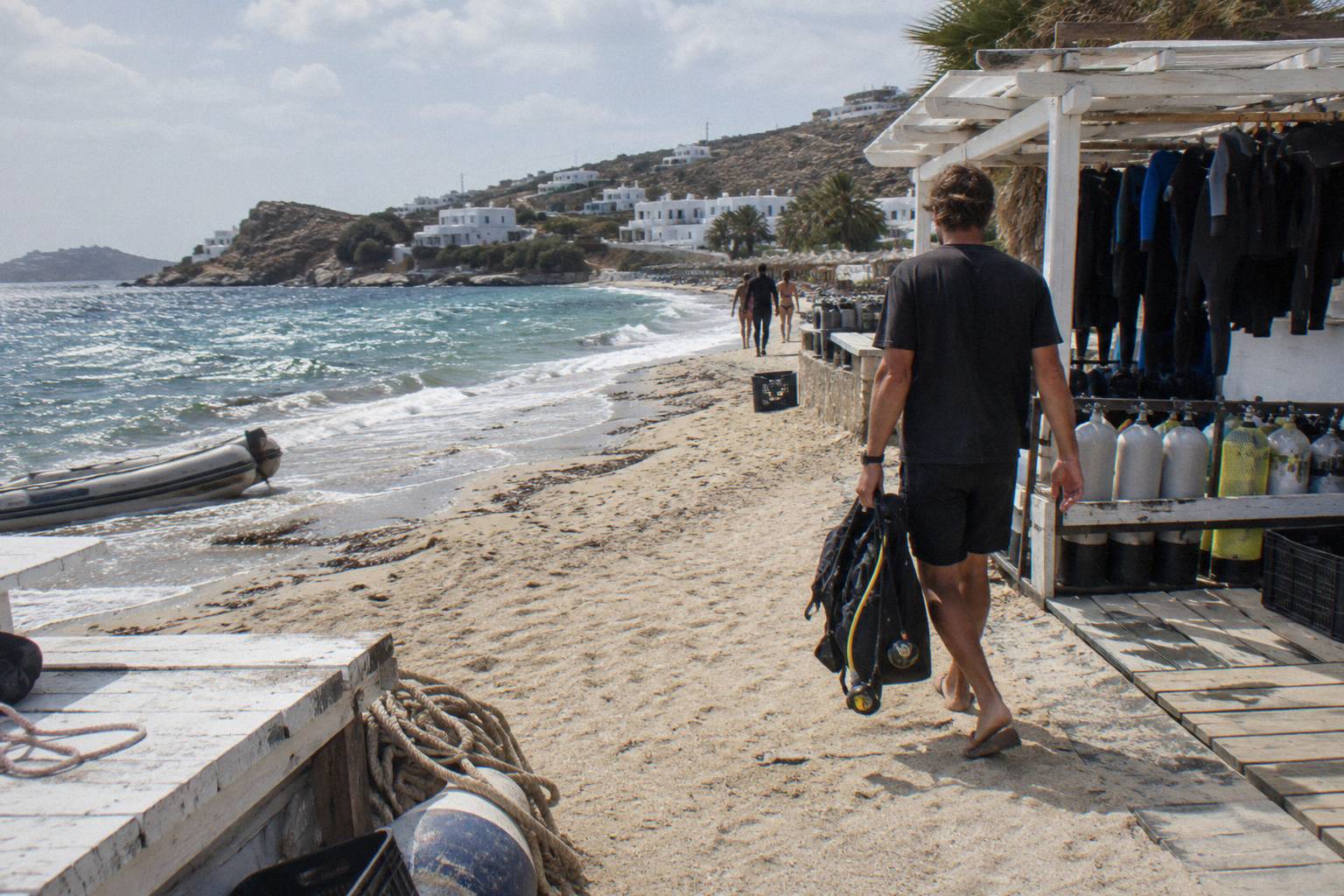
A related caution: a try dive does not qualify anyone for this trip. The two products sit in the same booking hub, which invites confusion, but the certified trip checks for a certification card at check-in and a recognition card from an introductory experience is not one. The right order for a complete beginner is the try dive now and a full certification course somewhere else in the world later; no Open Water, Advanced or refresher course is bookable here.
For certified travellers packing a departure-day plan, the working rule is simple: one last one-tank dive, then at least 12 hours to the flight; dive on two days running, and the figure becomes 18.
Do Snorkelling Trips Affect A Flight?
The snorkel trips sold here involve a mask, snorkel and fins at the surface rather than breathing compressed gas underwater, so DAN's preflight intervals, which address diving, do not attach to them. That covers the Group Beach Snorkeling hour from €99 per person, both Panormos private snorkels and the Hidden Bays RIB tour from €680 per group.
The distinction matters because half the trips on this island's water-sports menu are snorkelling, and families often mix the two. The Group Beach Snorkeling, 1 Hour trip at Paradise Beach is a guided shore snorkel, minimum age 5, rated 4.8 from 60 reviews, all sales final with weather cancellation. It involves no breathing apparatus and no dive, so no preflight interval follows from it.
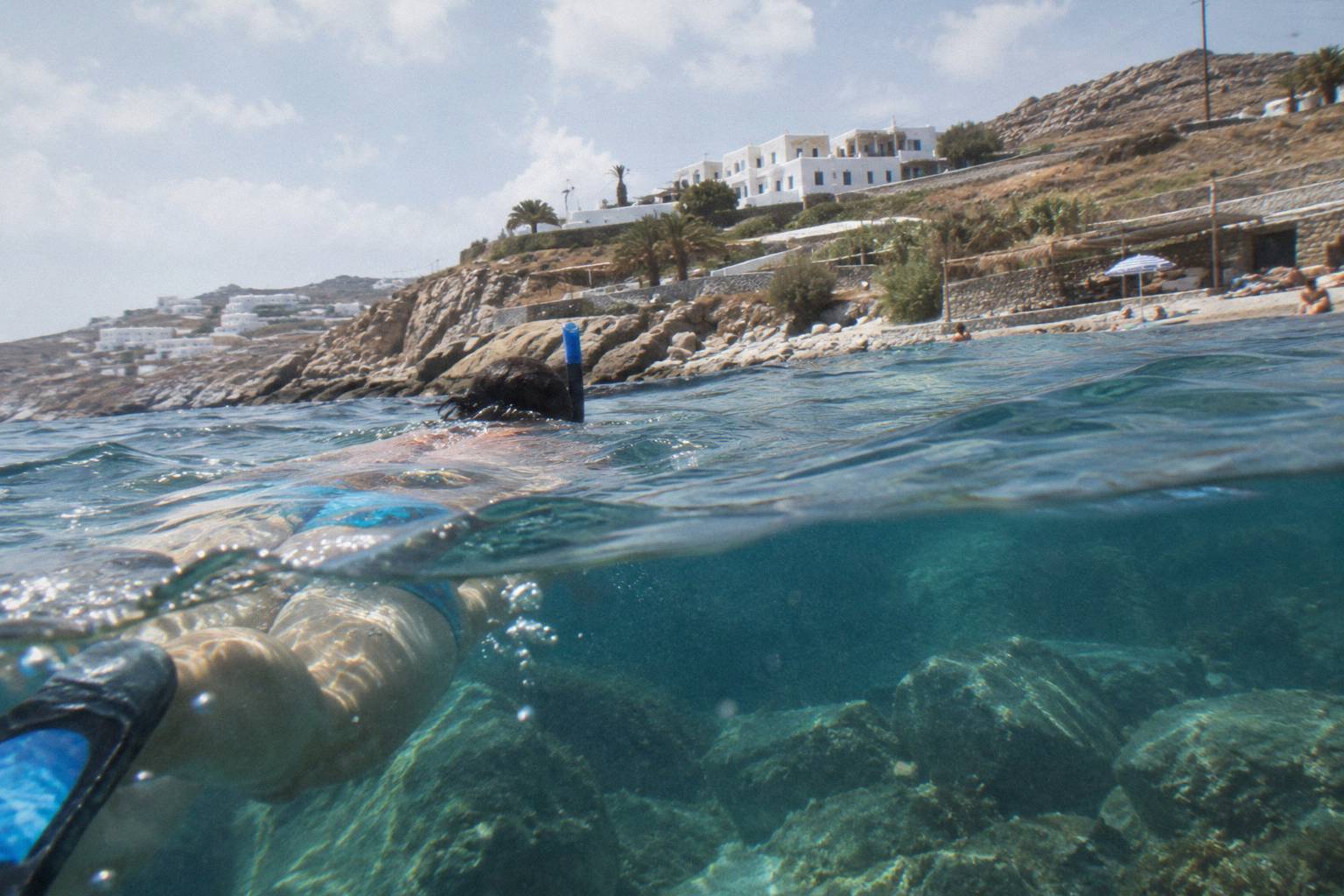
The two private Panormos snorkels work the same way: shore snorkelling guided by instructors and free divers, minimum age 6, one hour, one at from €120 per person and the transport-added version at from €150 per person, both with free cancellation up to 24 hours and a weather condition. Mykonos Snorkeling describes Panormos as a protected bay "sheltered from the high north winds", in the operator's own words. Neither involves compressed gas, so neither starts a DAN clock.
The Hidden Bays RIB trip, run by Mykonos Outdoors from Ornos Bay, is the only boat in the set: a private RIB with a skipper and a snorkelling instructor, 2 hours with about 45 minutes of snorkelling in a rocky inlet and optional low cliff jumps, minimum age 5, from €680 per group, free cancellation up to 24 hours with a weather condition. The route passes Psarou, Agia Anna, Paraga and Paradise, then Super Paradise, Agrari and Elia to a beach near Kalo Livadi, weather permitting. It is still surface snorkelling, and the DAN guidance does not reach it.
The practical upshot for a family or couple splitting up for the day: the diver in the group carries the flight timing constraint, and the snorkellers do not. A mixed plan that puts the non-divers on the boat or the beach snorkel while one person dives works fine, provided the diver's own 12 or 18 hours are protected.
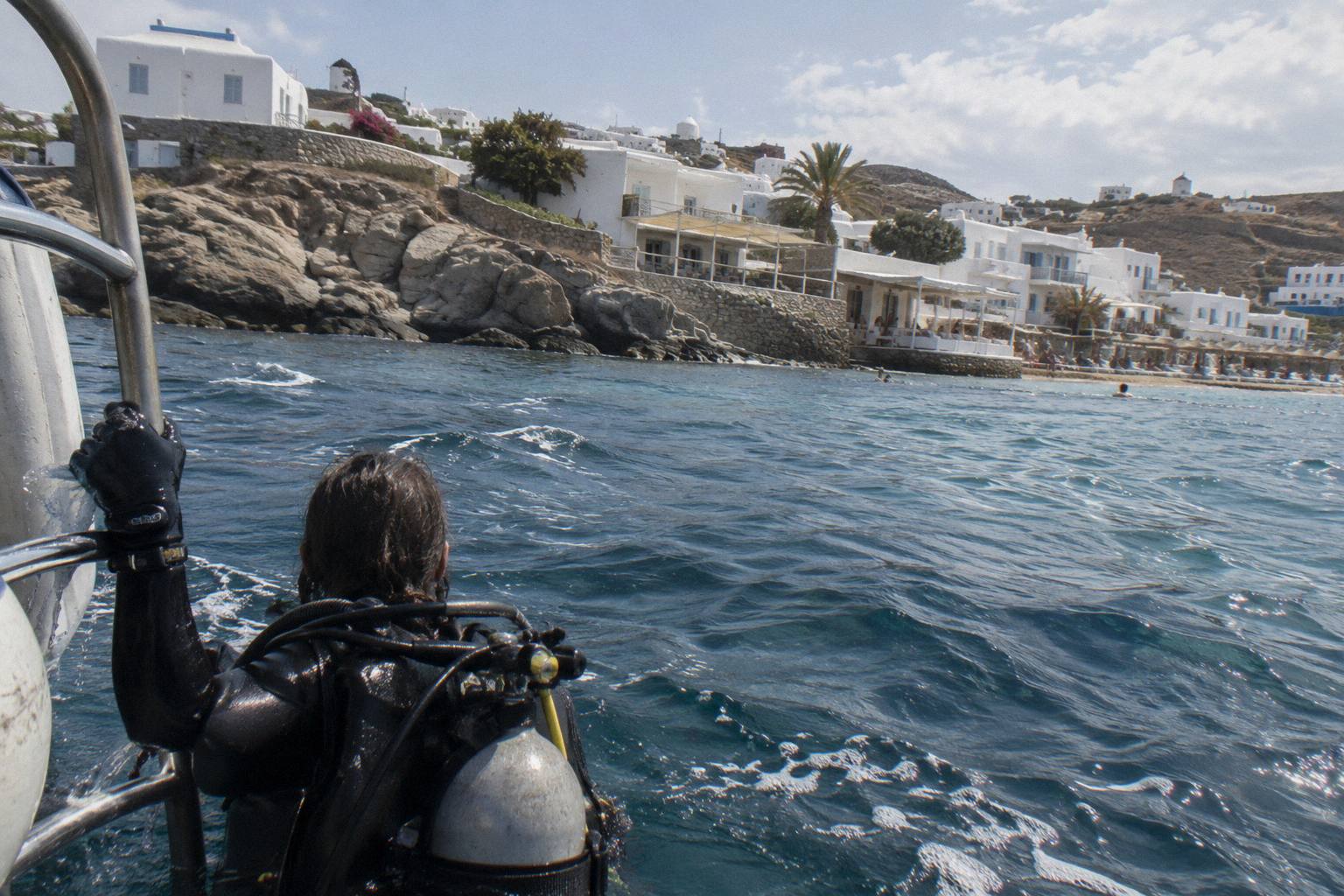
Why Did DAN Shorten Its Earlier Advice?
Anyone who learned to dive some years ago may remember being told to wait 24 hours before flying, period. That was the older consensus DAN describes: 12 hours after a single no-stop dive, 24 hours after repetitive multi-day diving, and 48 hours after dives with decompression stops. The current guidance keeps the single-dive figure at 12 hours and sets 18 hours for multi-dive or multi-day diving, on the strength of DAN's own research trials into preflight surface intervals.
For decompression diving, the change is a refusal to give a single number rather than a shorter one: DAN says little evidence exists and that an interval substantially longer than 18 hours appears prudent. No trip here involves decompression stops, so that line exists on this island only as background.
Which number should a traveller actually use when the two circulate together? The current DAN figures are the ones taught now, and where old advice conflicts, the newer agency guidance is the defensible choice. Some divers still apply the older 24 hours out of habit after multi-day diving, and nothing about that causes harm; it is simply more conservative than the current minimum. The figure that should never be quoted is something shorter than 12 hours after any dive.
| Trip | Base Price | Dives Given | Cancellation |
|---|---|---|---|
| First-Timer Try Dive, Lia reef | From €160 per person | One dive of 40 to 45 minutes | Free up to 24 hours; weather condition applies |
| Certified Divers, One Tank, 3 Hours | From €148 per person | One tank | All sales final; weather cancellation |
| Beginner Dive, House Reef | From €198 per person | Ask the operator | All sales final; weather cancellation |
| Group Beach Snorkeling, 1 Hour | From €99 per person | No dive, snorkel only | All sales final; weather cancellation |
| Private Snorkeling, GoPro Photos | From €120 per person | No dive, snorkel only | Free up to 24 hours; weather condition applies |
| Private Snorkeling, Transport Added | From €150 per person | No dive, snorkel only | Free up to 24 hours; weather condition applies |
| RIB Boat, Cliff Jumping, 2 Hours | From €680 per group | No dive, snorkel only | Free up to 24 hours; weather condition applies |
Seven trips, seven rows, and only the first three carry any preflight interval at all. The Beginner Dive row says "Ask the operator" for its dive count because the trip's entry does not give one, and that is the only cell in the table a traveller cannot answer from reading alone.
Since three of the trips are all sales final and four carry free cancellation up to 24 hours, weather can reshape a departure week regardless of flight timing; the article on how weather cancellations work on these trips covers which trips can be moved and which cannot.
Where Do The Shore Dives Actually Happen?
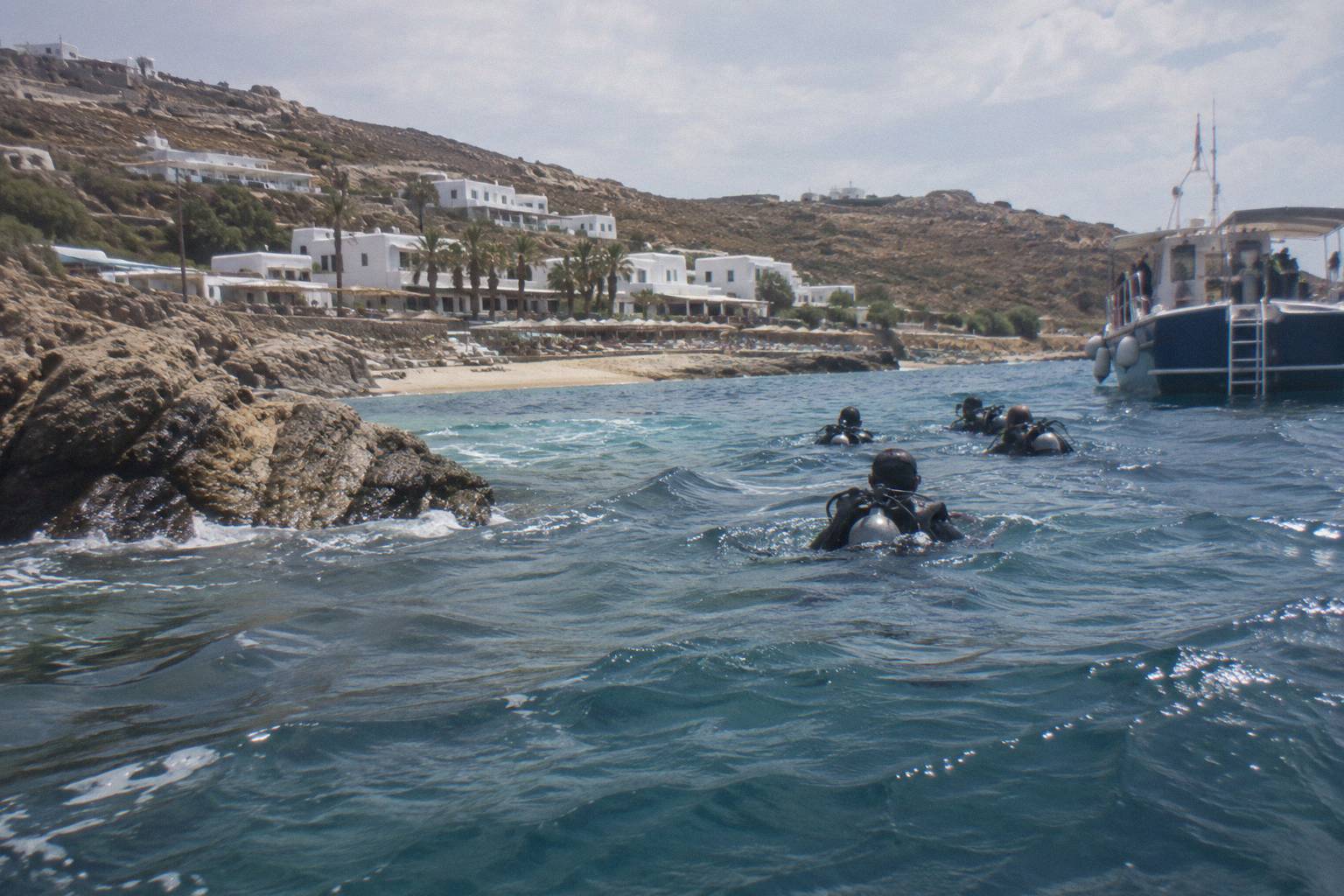
Every dive sold on the island here is a shore dive: GoDive runs its try dive from Lia Beach onto Lia reef, which the centre lists at 7 to 27 m, and the Paradise Beach centre runs its beginner experience along Paradise House Reef towards the pier for about an hour. No trip here visits a wreck or a cavern.
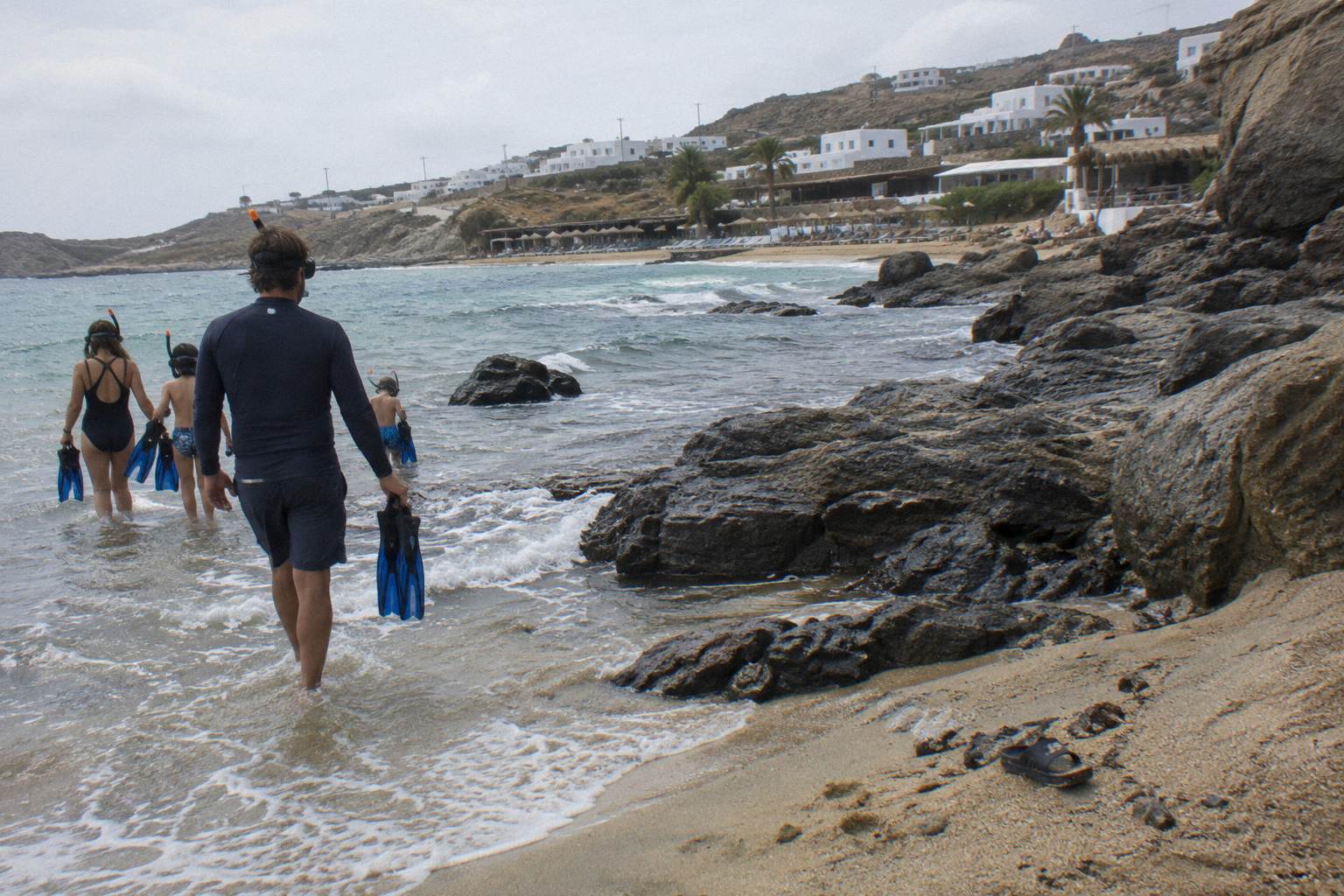
The geography helps explain why the flight question is simple here. Mykonos is a Cyclades island between Tinos, Syros, Paros and Naxos, with an area of 85.5 square kilometres, and Mykonos Town sits on the west coast, per the island's Wikipedia entry. The dive bases sit a short hop from town: the Paradise Beach centre is about 10 minutes away at 4.5 km, with buses and taxis running from town, and the GoDive centre is at Lia Beach in the south-east. Short transfers and shore entries keep the whole outing inside two or three hours, which leaves the rest of the day for the surface interval.
GoDive's own site list names other reefs and sites beyond the try-dive programme, including Kalafakiona Reef with its barracuda schools and scattered ancient amphora pieces at 5 to 35 m, cavern dives at the Tragonisi caves at the site Chtapodi, and the wreck Anna II, a 62 m cargo ship that sank in the south-east of the island on 20 July 1995. Those depths are the operator's own listings, not a promise for any particular day, and none of those sites belongs to a trip sold here.
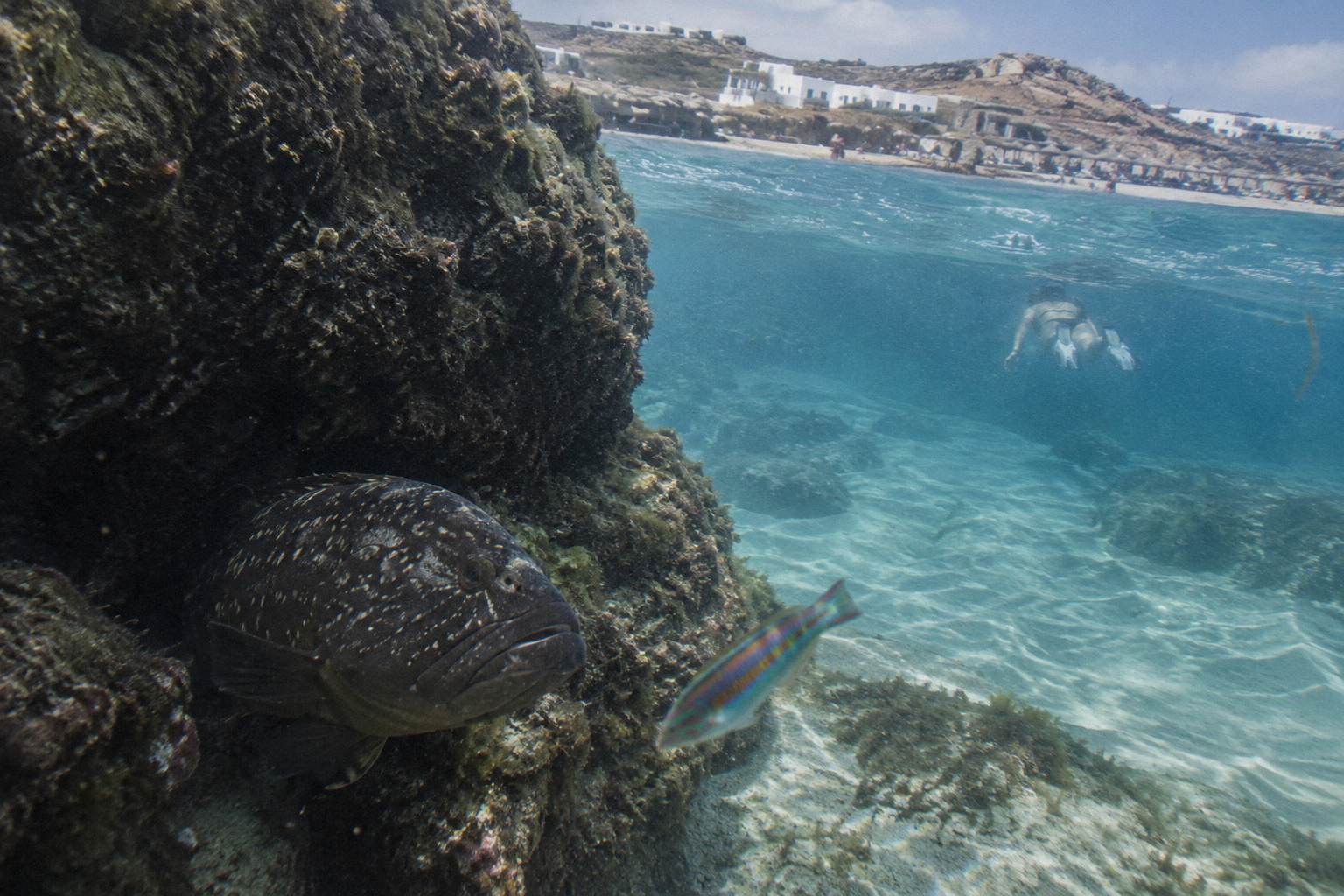
The amphora pieces connect to a rule worth knowing before anyone dives in Greek waters. The Ephorate of Underwater Antiquities, established in 1976 as a Ministry of Culture service, has jurisdiction over submerged antiquities throughout Greece, and Law 4858/2021 designates shipwrecks and aircraft more than 50 years old as monuments. Removing or damaging antiquities and wrecks is protected under Greek heritage law, so divers look and do not touch.
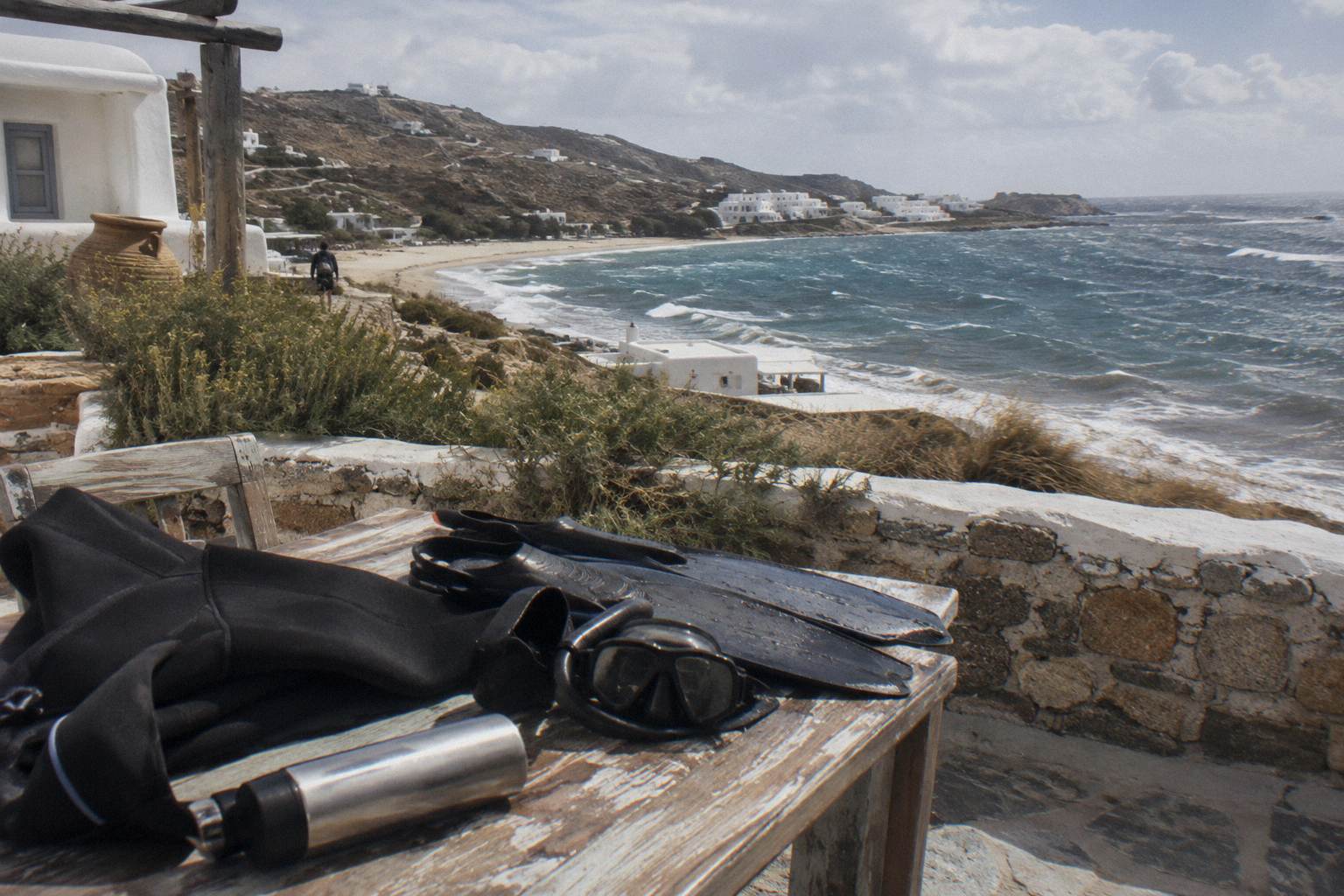
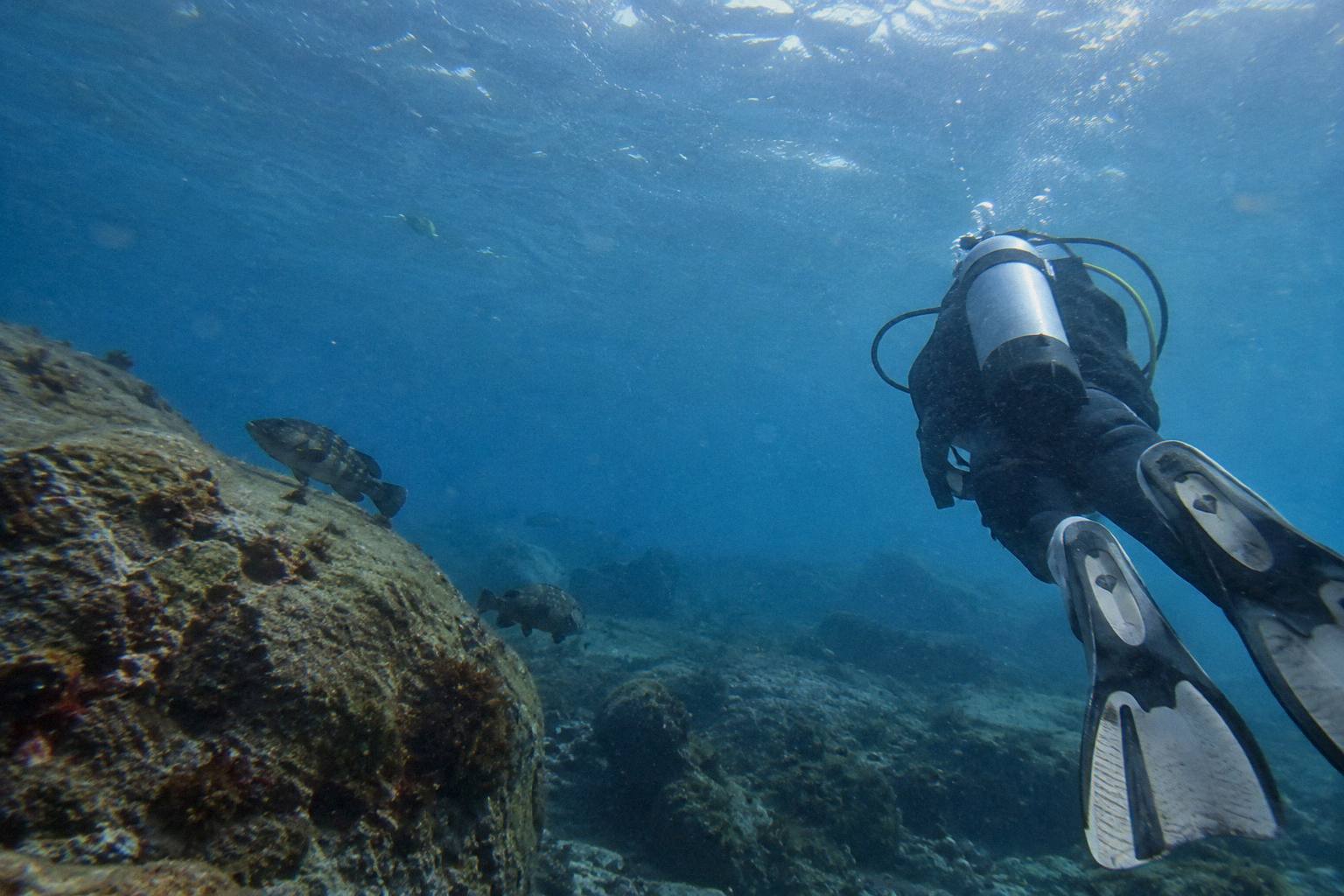
Marine life follows the same pattern of possibility rather than promise. The Paradise Beach centre lists groupers, barracuda, octopus, rainbow wrasse, moray eels and flounders that may be encountered, and GoDive lists sponges and nudibranchs at Lia Reef. None of that affects the flight clock, but it explains why travellers book the dives in the first place.
What Trips People Up When Booking A Try Dive?
Three things trip people up: a try dive is an introduction, never a certification, and it unlocks nothing on the certified-diver menu; cancellation terms differ by operator, free up to 24 hours on the GoDive and snorkelling trips but all sales final on the three Paradise Beach products; and hotel or port pickup costs extra wherever it is offered at all. None of this is visible on the booking button.
The first trap is qualification. A traveller who books the Discover Scuba Diving Adventure at Paradise Beach, rated 4.7 from 75 reviews at from €198 per person, sometimes assumes the experience doubles as a licence or a first step towards Open Water. It does neither: the centre calls it "not a certification course", a maximum of four people join each instructor, and no follow-on course of any kind is bookable on the island's trips here. The medical questionnaire is a PADI requirement completed before the experience, and a recognition card or try-dive record is not a licence.
The second trap is cancellation. The three Paradise Beach products, the beginner dive, the one-tank certified trip and the guided beach snorkel, are all sales final with weather cancellation, while the Lia reef try dive, both Panormos private snorkels and the Hidden Bays RIB tour carry free cancellation up to 24 hours before the start. A traveller with a changeable itinerary should weigh that difference at the moment of booking, not afterwards.
The third trap is the flight itself, which is where the question began. A try dive in the morning and a flight the same evening sits inside DAN's 12-hour minimum if the dive surfaces late enough, but only just; a morning dive plus an evening flight usually does not clear it, and an afternoon dive never does. Booking the dive for the second-to-last day of a trip, rather than the last, removes the arithmetic entirely.
For a first-time diver who wants the simplest version of all of this, the First-Timer Try Dive at Lia reef from €160 per person keeps the day short, the dive count at one and the cancellation free up to 24 hours. Comparing it against the certified-diver and Paradise Beach options side by side is the fastest way to see which case applies.
Common Questions About Flying After Diving
How Long Should You Wait To Fly After Scuba Diving?
DAN, the Divers Alert Network, recommends a minimum preflight surface interval of 12 hours after a single no-decompression dive and 18 hours after multiple dives per day or multiple days of diving. After dives requiring decompression stops, DAN says an interval substantially longer than 18 hours appears prudent. No trip sold here involves decompression stops.
Does The Lia Reef Try Dive Count As One Dive?
Yes. The Try a DIVE at Lia Beach runs one open-water dive of 40 to 45 minutes after a mini course of about 1 hour 30 minutes, so on its own it falls under DAN's 12-hour line for a single no-decompression dive.
Do Snorkelling Trips Need A Wait Before Flying?
No preflight interval follows from snorkelling. DAN's guidance addresses diving with compressed gas; the guided beach snorkel, both Panormos private snorkels and the Hidden Bays RIB tour all stay at the surface with mask, snorkel and fins.
What If I Dive Two Days In A Row?
DAN's 18-hour line covers multiple dives per day or multiple days of diving, so a diver on the water two days running waits at least 18 hours from the last surfacing before a flight, even if each day held only one dive.
Does A Try Dive Let Me Book The Certified-Diver Trip Later?
No. A try dive is an introduction and never a certification; a recognition card or try-dive record is not a licence. The Certified Divers, One Tank trip requires an existing certification card at check-in.